1. Introduction: A Leap into the Future
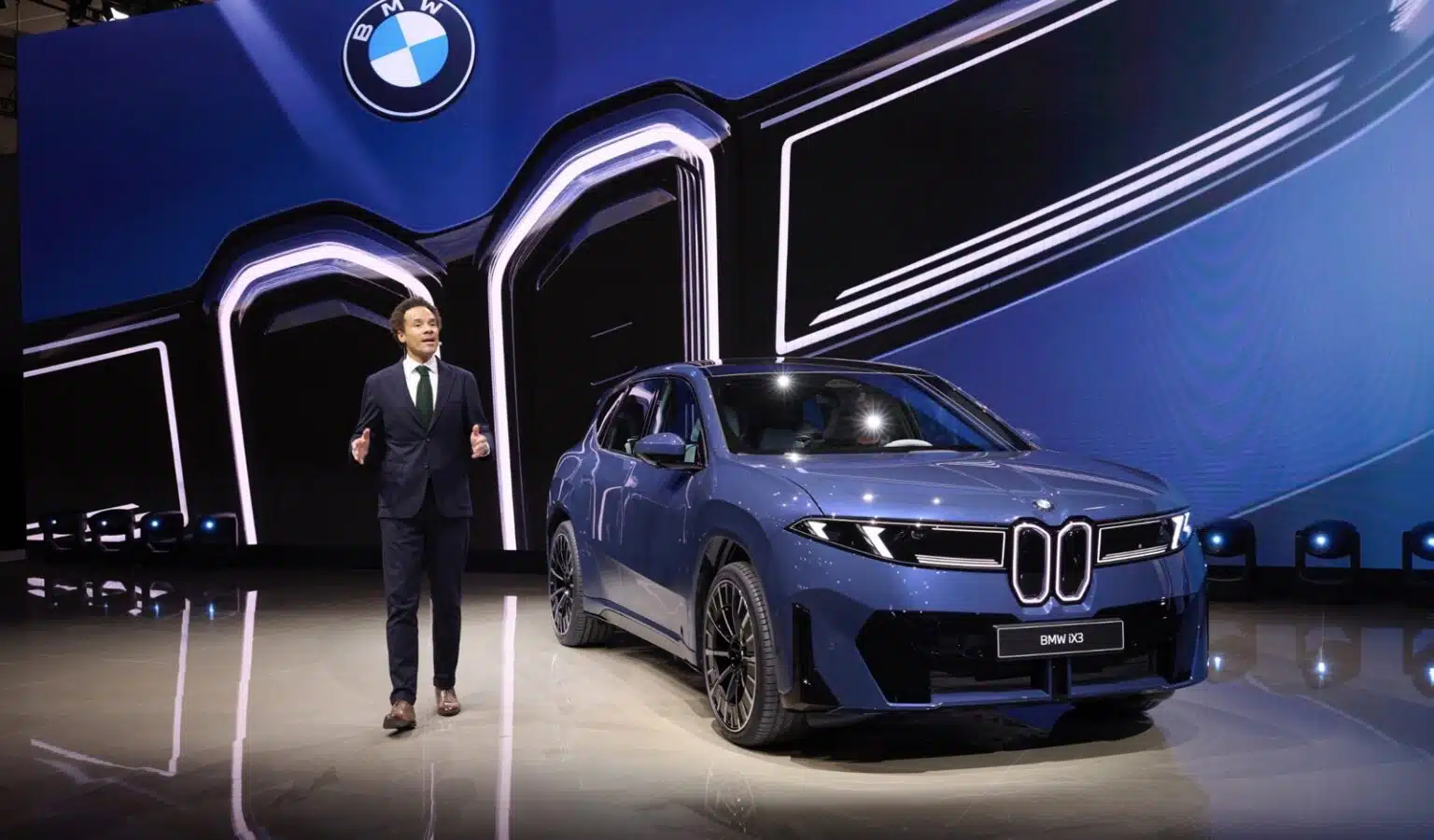
When BMW revealed the new BMW iX3 at the Japan Mobility Show 2025, the auto-world took notice. Not only is this model the first of BMW’s “Neue Klasse” line of EVs, but it also boasts a 400 kW maximum DC charging capability, marking a significant technological leap. BMW Group PressClub+2Paul Tan’s Automotive News+2 In this blog, we’ll explore the car’s key features, why this matters, and what it means for the future of electric mobility.
2. What’s New: Key Technical Highlights
First and foremost, the iX3 is built on BMW’s sixth-generation eDrive architecture (Gen6) with an 800-volt system and cylindrical battery cells, which together enable the massive 400 kW charging rate. bmwgroup.com+2Paul Tan’s Automotive News+2
Moreover:
- BMW reports that the iX3 can add up to 372 km (231 miles) of range in just 10 minutes of DC charging. BMW Group PressClub
- The battery can go from 10% to 80% in about 21 minutes under ideal conditions. BMW BLOG+1
- It supports bidirectional charging (V2L, V2H, V2G), meaning the car can send power out to a home, grid or device. Paul Tan’s Automotive News+1
Clearly, these specs set the iX3 apart from many EVs on the market today.
3. The Debut at Japan Mobility Show 2025
At the Japan Mobility Show, BMW chose to showcase the iX3’s Asian premiere alongside other groundbreaking technologies — which underscores just how important this model is for the brand’s future. BMW Group PressClub+1
For attendees, the experience wasn’t just about looking at a car: it was about seeing the future of mobility — design, connectivity, software-defined vehicle systems, and more. As BMW notes, the iX3 launches an all-new design language, reflecting its role as the first Neue Klasse model. BMW Group PressClub
In short: this was more than a reveal — it was a milestone.
4. Why 400 kW Charging Matters
Now, you might ask: why is 400 kW so consequential? Here are some of the big reasons:
- Reduced charging downtime: With peak charging around 400 kW, drivers can add hundreds of kilometres of range in the time it takes to have a coffee break.
- Less “range anxiety”: The faster you can recharge, the more viable EVs become for longer journeys or use in markets with limited charging infrastructure.
- Technological leadership: BMW’s adoption of 800-volt architecture and advanced battery cells signals that major automakers are accelerating EV tech — and this trickles down to the broader market.
In essence, faster charging isn’t just a number — it changes how people think about owning and using EVs.
5. Beyond Charging: Design, Connectivity & Sustainability
While the charging headline may dominate, the iX3 offers more layers worth discussing. For example:
- The “Panoramic iDrive” system with a curved display and the new “BMW Operating System X” gives an advanced digital cockpit experience. BMW Group PressClub+1
- On the sustainability front, BMW reports that the new iX3 will benefit from reduced CO₂-equivalents across its lifecycle and uses recycled or secondary materials. BMW Group PressClub+1
- The architecture also allows for future over-the-air updates and other “software-defined vehicle” features, pointing to a shift in what cars can become. All of this means that the iX3 isn’t just about faster charging — it’s about redefining the vehicle-ownership experience.
6. What This Means for the Market (And for You)
For consumers and auto-enthusiasts alike, the implications are notable:
- If you’re looking at EV options, a model like the iX3 raises expectations: rapid charging will soon be a standard, not a luxury.
- For markets like Pakistan (where you are), the arrival of such advanced EVs may influence local availability, import-costs, charging infrastructure investment, and ultimately driving habits.
- For the automotive industry, every brand will likely feel pressure to match or beat these specs — which could accelerate EV advancement globally.
In short: we’re witnessing a shift. The iX3 doesn’t merely play catch-up — it helps push the game forward.
7. Conclusion: The Road Ahead
To wrap up, the BMW iX3’s reveal at the Japan Mobility Show 2025 is more than a product launch. It represents a strategic pivot for BMW, a technological leap for EVs, and a signal to the industry that fast charging at 400 kW is now viable. With a reported range of up to 805 km (WLTP) in some markets and the charging performance to match, the iX3 sets a high bar. BMW Group PressClub+1
Of course, real-world factors like charger availability, local charging grid capabilities, and cost will still matter — but for now, the future looks promising. Whether you’re an EV buyer, automotive follower, or simply curious about what’s next, the iX3 is one to watch.
For now, keep an eye on local announcements for launch timing, charging infrastructure developments in your region, and how BMW’s global rollout plans evolve. If you like, I can look into what this means specifically for the Pakistani market and when we might expect the iX3 (or similar models) locally. Would you like me to check that?