
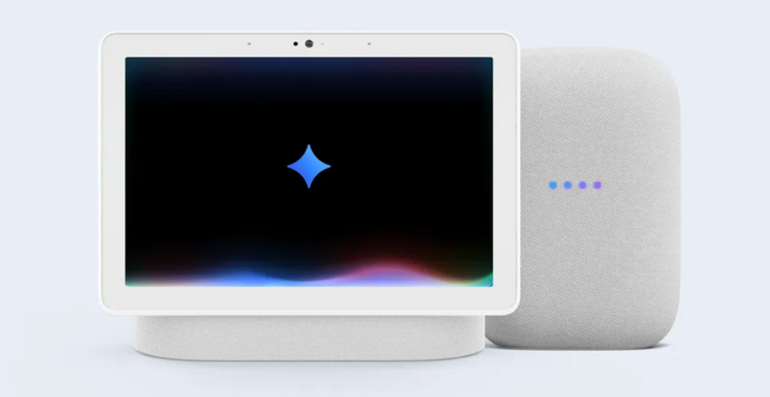
In a significant move, Google has introduced the new voice-assistant experience, Gemini for Home, which is set to replace the longstanding Google Assistant on compatible smart home devices in the U.S. Google Help+3blog.google+39to5Google+3 Previously, Google Assistant provided basic voice commands and smart-home control. However, Gemini for Home is designed to be more conversational, context-aware and capable of handling more complex household tasks and natural language requests. blog.google+1
This is a big deal because it signals Google moving from reactive commands (“Hey Google, turn off the lights”) toward more proactive, fluid interactions (“Hey Google, I’m about to start cooking—can you dim the kitchen lights, set a timer for 15 minutes and play something upbeat?”). Indeed, Gemini for Home understands nuanced instructions and follow-up questions. blog.google+1
2. What Gemini for Home Can Do
So what exactly can this new assistant do? Let’s look at some of the key capabilities:
- Control smart home devices with more natural commands (for example: “Turn off all the lights except the living-room lamp”). blog.google+1
- Engage in more conversational back-and-forth (you ask a question, follow up without repeating context). blog.google+1
- Media discovery across platforms: instead of remembering exact titles, you can say something vague (e.g., “the song from that summer blockbuster about race cars”) and Gemini will figure it out. blog.google
- New smart-home camera & door-bell features: AI descriptions of events, video-history search by natural language, daily “Home Brief” summaries. Google Help+1
- Built into the improved and redesigned Google Home app, making automation setup and device control easier. mint+1
In short, Gemini for Home is not just an upgrade—it’s a rethinking of how you interact with your home.
3. When and Where It’s Available
The rollout for Gemini for Home begins in the U.S. with an early access program. According to Google, here’s the schedule:
- Early access in the United States: started late October 2025. 9to5Google+2Gadgets 360+2
- Devices eligible: many existing speakers, displays, and Nest hardware that already worked under Google Assistant. 9to5Google
- Broader international rollout: planned for early 2026 in other regions. 9to5Google+1
If you’re in the U.S. and have compatible hardware, you may receive a prompt in the Google Home app or you can opt-in manually via Settings ▶ Home settings ▶ Early Access. Gadgets 360+1
4. What You’ll Need & Subscription Details
While the basic Gemini for Home experience is free for compatible devices, Google is also introducing advanced features that require a subscription. Key points:
- Basic features (voice assistant, smart home control, media, alarms/timers) are available without extra cost. Google Help+1
- Advanced features (Gemini Live conversation mode, AI camera features like alerts, video-search) are part of the new Google Home Premium subscription. blog.google+1
- Make sure your Google Home app is up-to-date (version 4.x) to access early access settings. Gadgets 360
Thus, while you can start using Gemini for Home without extra cost, you’ll want to consider whether the premium features are worth it for your household.
5. Benefits for Smart Home Users
Why should you be excited? There are several benefits:
- More natural interaction: You no longer have to think in rigid commands; Gemini understands context, follow-ups and complex requests.
- Better automation: With improved understanding, you can set up more sophisticated routines and ask your assistant to manage multiple devices or steps in one command.
- Enhanced security and monitoring: For households using Nest cams or doorbells, the AI-powered camera features give richer information (“dog digging in the garden”, “parcel delivered”) rather than generic alerts. 9to5Google+1
- Unified control via redesigned app: Smart home users often face fragmentation (different apps/devices); the new Google Home app along with Gemini simplifies that.
- Future-proofing: As Google phases in Gemini, you’ll be ready for next-gen features and integrations rather than being left behind. Skywork
If you’re already using a smart home ecosystem, this is a meaningful upgrade—not just incremental, but transformational.
6. Considerations and Things to Keep in Mind
Of course, no rollout is flawless. Here are some things to keep in mind:
- Because it’s early access, not all features may be fully available or stable yet. Some functionality may still be limited according to region/hardware. Skywork
- If you switch to Gemini for Home, in some cases you may not be able to revert easily to the classic Google Assistant while on the enrolled devices. Yahoo Tech
- Some users on the web have noted gaps: for example, basic routines or certain integrations may not yet be fully supported. Reddit+1
- Subscription costs: advanced features may tempt you into a paid tier, so evaluate whether you need them immediately or can wait.
- Compatibility: Make sure your devices are among those supported and updated. Some older hardware may not receive full Gemini capabilities. 9to5Google+1
Thus while the promise is strong, it’s wise to adopt with realistic expectations and perhaps wait for your setup to be fully supported.
7. What It Means for the Future of Smart Homes
Practically speaking, this launch of Gemini for Home signals that voice assistants are entering a new era. Rather than being add-ons that respond to commands, assistants are becoming conversation partners, home coordinators, and automation hubs.
For the smart home industry, this means:
- More emphasis on contextual AI: Your assistant won’t just do tasks, but understand your intention.
- Increased subscription models: Premium features are likely to be the norm, not the exception.
- Consolidation of ecosystems: Google is aligning hardware, software, app and services around Gemini, making the “smart home” less fragmented.
- Competition heating up: With this move, Google is clearly stepping up against other voice and smart-home platforms, raising user expectations.
- A push toward more intelligent devices: Devices like cameras and doorbells won’t just record—they’ll interpret, summarise and act on what’s happening in your home.
In short, Gemini for Home isn’t just a feature update—it’s a sign that smart homes are evolving into genuinely intelligent living spaces.
In conclusion, if you’re in the U.S. and already using Google Home / Nest devices, now’s an excellent time to opt-in for early access to Gemini for Home. The benefits of more natural voice control, better automations, camera intelligence and a unified app are compelling. At the same time, keep in mind this is early days and some features may still mature. In any case, the era of conversational, context-aware home assistants has certainly arrived.