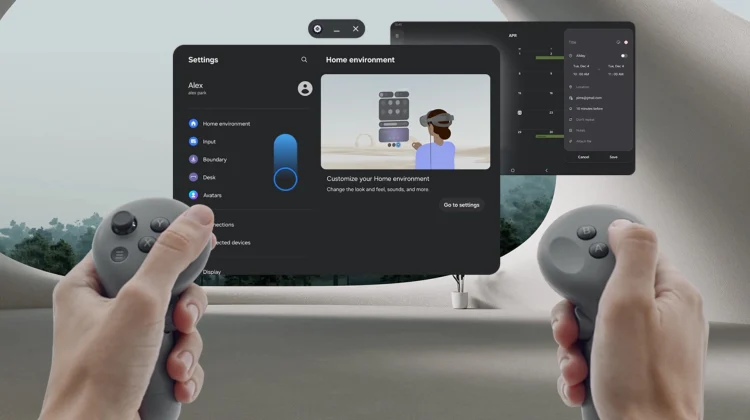
When Samsung launched its new mixed-reality headset, the Galaxy XR, many eyes were on the headset itself. However, somewhat unexpectedly, one of its key accessories—the optional motion-tracked controllers—sold out almost immediately in the U.S. market. Yahoo Tech+2SamMobile+2 This rapid sell-out signals more than just a good accessory launch: it suggests there’s substantial early excitement around the platform.
2. What Happened and Why It Matters
To give context: the Galaxy XR headset debuted in the U.S. and South Korea at a price of about US $1,799. Android Central+2Lowyat.NET+2 The controllers, sold separately for around US $250 (and discounted at launch in some bundle offers) ran out of available stock within hours. UploadVR+1
Why is this important? First, it highlights that users are eager for a full immersive experience—not just the headset in isolation. Despite the headset being capable of hand‐tracking, eye‐tracking and voice controls, many buyers want physical controllers to unlock gaming and more interactive use‐cases. Moreover, this demand suggests strong confidence in the platform’s future, even at a premium price.
3. What the Sell-Out Suggests About Consumer Interest
Because supply of the controllers was limited (or at least quickly exhausted), the sell-out conveys several key messages:
- High willingness to invest: Buyers showed readiness to spend more beyond the headset itself, indicating that the accessory isn’t seen as optional but as essential.
- Gaming and immersive use-cases matter: While Samsung positioned the headset partly for productivity and mixed reality, the accessory demand suggests users are thinking along gaming and VR-style lines. Yahoo Tech
- Platform momentum is real: A fast accessory sell-out can indicate that the install base of the main product (the headset) will grow faster than expected. It also signals to developers and partners that there’s a viable ecosystem forming.
4. Supply, Pricing and Strategic Considerations
Of course, the sell-out also raises questions. For one thing, did Samsung anticipate this level of demand for the controllers? Some reports suggest that supply was constrained or that Samsung did not stock a large surplus of controllers at launch. PC Guide+1 Additionally, the controllers’ pricing (US $250) is noteworthy given that they are sold separately—not bundled with the headset. Android Authority+1
From a strategic viewpoint, separate‐sale accessories can be profitable for companies, but also carry risk: if supply cannot meet demand, potential buyers may be frustrated or may delay purchase of the main device. Moreover, accessories running out quickly can shift attention from the core product’s capability to the ecosystem constraints.
5. Implications for Developers, Ecosystem and Future Products
Given the strong early interest, several implications arise for developers and ecosystem players:
- Game and app creators should take note: The fact that users prioritized controllers suggests that apps and games needing physical input will have a ready audience.
- Accessory ecosystem growth is key: Beyond controllers, other peripherals (cases, tracking accessories, input devices) may become more important as the user base grows.
- Future product decisions may shift: Samsung may adjust production volumes or bundle strategies in future launches to better align with demand. The quick sell-out could inform whether future versions include controllers in the box or keep them separate.
- Global rollout and stock logistics matter: With initial availability limited to certain markets (U.S., South Korea) and accessories going out of stock fast, Samsung and partners will need strong supply chains to support expansion.
6. Should Buyers Jump In or Wait?
If you’re considering buying the Galaxy XR platform, what should you do? On the one hand, the rapid sell-out of the controllers suggests the platform is gaining traction—and buying sooner may position you ahead of many. On the other hand, you should weigh a few factors:
- If the accessory you want is sold out (as is the case at launch for the controllers), you may face delivery delays or have to use alternate input options in the meantime.
- Assess your primary use-case: If you’re more about media, productivity, or spatial computing rather than gaming, you might be fine with the headset’s built-in input (hand/eye/voice). If you intend to play VR titles that require controllers, then ensure you can obtain the accessory.
- Monitor pricing and bundle offers: Sometimes bundles emerge that offer better value (e.g., headset + controllers for a reduced combined price).
- Consider upcoming stock and global availability: If you’re outside the initial launch markets, you might want to wait for wider availability or confirmed restock dates.
In conclusion, the swift sell-out of the Galaxy XR controllers is an early indicator of strong interest in Samsung’s XR platform. While the headset alone provides a lot of value, the accessory demand highlights that many users are looking for immersive, interactive experiences—beyond passive viewing. For Samsung, this moment presents both a validation and a challenge: validation that the platform resonates, and a challenge to ensure supply and ecosystem readiness align with the excitement. For consumers and developers alike, this is a signal that XR is stepping up—and accessories matter.