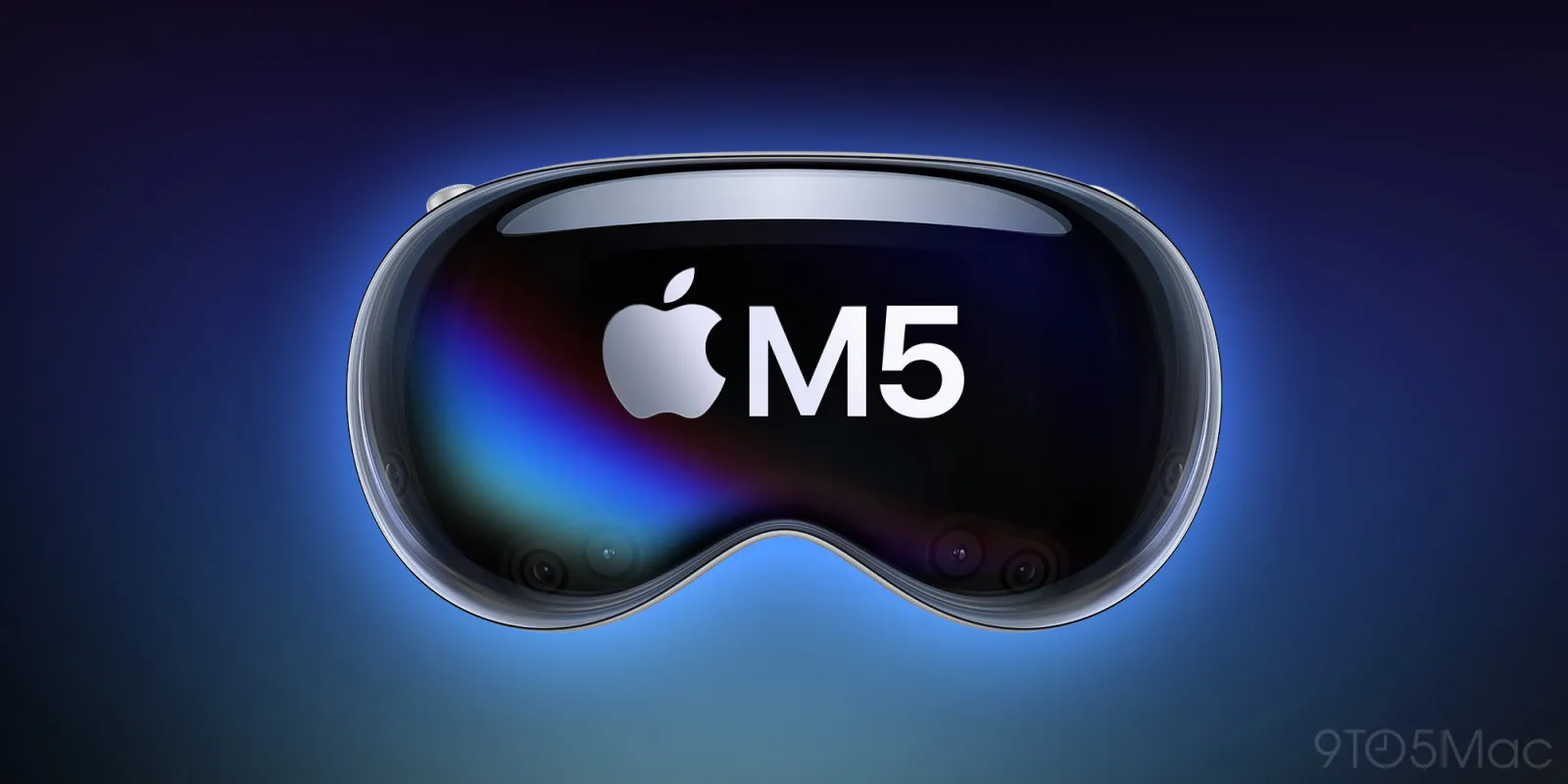
The latest version of Apple’s spatial computing headset—now upgraded with the M5 chip—arrives alongside a new head-strap design (the Dual Knit Band) and expanded controller support via the PSVR2 Sense Controller. Together, these updates reflect Apple’s continued experiment in blending premium hardware, immersive experiences, and accessory modularity. In this review, we explore how these three components integrate, what’s been improved (and what hasn’t), and whether this makes the Vision Pro a stronger proposition now.
1. What’s New: M5 Chip, Dual Knit Band & Controller Support
First and foremost, the Vision Pro upgrade replaces the previous M2 chip with the new M5 chip, enabling higher graphical output, a 120Hz refresh rate, and more efficient on-device AI tasks. Lifewire+4MacRumors+4Apple+4 At the same time, Apple introduces the Dual Knit Band—a dual-strap design with tungsten counterweights and a fit dial for improved comfort. Apple+2Gadget Hacks+2 On the controller side, the system now supports the PSVR2 Sense Controller via visionOS 26, opening up the Vision Pro for more traditional game-style input. AppleInsider+2TechRadar+2
Thus, Apple addresses three major axes: raw performance (M5), user comfort (Dual Knit Band) and input/interaction (controller support). However, each improvement also comes with caveats, which we’ll examine.
2. Performance Gains and What They Feel Like
With the M5 chip, Apple claims a 10 % boost in display pixel rendering and a jump to a 120Hz refresh rate. MacRumors Early reviews note smoother performance under heavy workflows and reduced stutter compared to the previous generation. gentechpc.com+1 In practice, transitions between spatial windows, gesture interactions and high-fidelity apps feel snappier. Moreover, the improved display smoothness helps when using Mac Virtual Display mode or immersive media playback.
Yet, it’s important to temper expectations: the field of view remains unchanged and the device is still bulky compared to many competitors. MacRumors So while the upgrade is meaningful, it’s incremental rather than revolutionary.
3. Comfort: Dual Knit Band—Better, but Not Perfect
Comfort has been a consistent criticism of the Vision Pro. In response, Apple’s Dual Knit Band features upper and lower straps in one piece, and tungsten inserts to counterbalance the heavy front of the headset. Gadget Hacks+1 Reviewers report that the new strap “finally spreads and balances the headset’s weight” more effectively, enabling longer usage without as much cheek or forehead pressure. gentechpc.com
On the flip side, the band slightly increases total weight (because of the counterweights) and some users still feel fatigue after extended wear. Tom’s Guide Consequently, if you’re planning marathon sessions, the experience is improved—but not yet equivalent to ultra-light headsets. In short: the comfort step is real, but the headset remains premium-heavy.
4. PSVR2 Sense Controller: A Step Toward Gaming, But Limits Remain
Perhaps the most intriguing addition is support for the PSVR2 Sense Controller. With motion tracking (6 degrees of freedom), finger-touch detection and vibration feedback, this opens up the Vision Pro for more serious interactive experiences. AppleInsider+1 In practice, users report pairing success and smoother UI navigation when using the controller. Reddit
Nevertheless, there are important caveats. At the time of writing, the PSVR2 controllers aren’t yet sold separately in many markets, forcing potential buyers to purchase the full PSVR2 headset bundle to obtain them. TechRadar Moreover, the software ecosystem for Vision Pro gaming is still sparse; many major VR titles remain absent. ai.gadgetsxray.com Hence, while the controller support is an encouraging sign, it doesn’t immediately transform the Vision Pro into a VR gaming powerhouse.
5. Real-World Use: Strengths, Weaknesses & Who It’s For
In real use, the combination of upgraded performance, comfort improvements and controller support makes the Vision Pro a more polished experience. If you’re using it for productivity, spatial computing, immersive media or occasional gaming, you’ll appreciate the refinements.
On the other hand, if you expected a dramatic redesign, massive weight drop or a full tilt toward hardcore VR gaming, you may be disappointed. The price remains steep (starting at $3,499), the ecosystem is still nascent for games, and the headset is still physically substantial. Lifewire+1 In short, this version deepens and broadens Apple’s experiment—but it doesn’t pivot it into a new category entirely.
Therefore, the Vision Pro (M5) is best suited for early adopters, spatial computing enthusiasts, Apple ecosystem loyalists and professionals who can make use of its high-end features. If you’re primarily after budget VR gaming, other options may offer better value.
6. The Bigger Picture: Apple’s Experiment and What’s Next
Looking ahead, this update signals how Apple approaches spatial computing: iterative improvement over radical change, ecosystem integration over niche features. The Dual Knit Band suggests Apple is prioritizing comfort (a necessary prerequisite for long sessions), the M5 upgrade shows performance layering, and controller support hints at broader input flexibility.
Yet, the Vision Pro remains an experimental and premium device. The challenge for Apple now is to expand the ecosystem—apps, games, accessories and affordability. The PSVR2 controller support is a step toward that, but much depends on developer uptake and content availability. The weight and cost still inhibit mainstream adoption. In a sense, Apple is refining its experiment—rather than reinventing it.
Hence, if we view the Vision Pro as a bellwether of future AR/VR paradigms, the M5/Dual Knit/Controller update strengthens its position—but also reinforces that the journey is far from over.
Conclusion
In conclusion, the Apple Vision Pro (M5) paired with the Dual Knit Band and PSVR2 Sense Controller support offers a meaningful package of enhancements. Performance is smoother, comfort is improved, and interactive input options are expanding. However, it still remains a premium niche device—not yet the mainstream “VR/AR everyday” headset. For those who invest, the experience is richer; for those hoping for complete transformation, the gains are solid—but evolutionary rather than revolutionary.
If you’re ready to live at the cutting edge of spatial computing and willing to pay for it, this package is among the best out there. And perhaps more importantly, it shows that Apple’s experiment in this space continues—with refinement rather than reset.